



Electric Guitar Pickups
Introduction
Single Coil Pickups
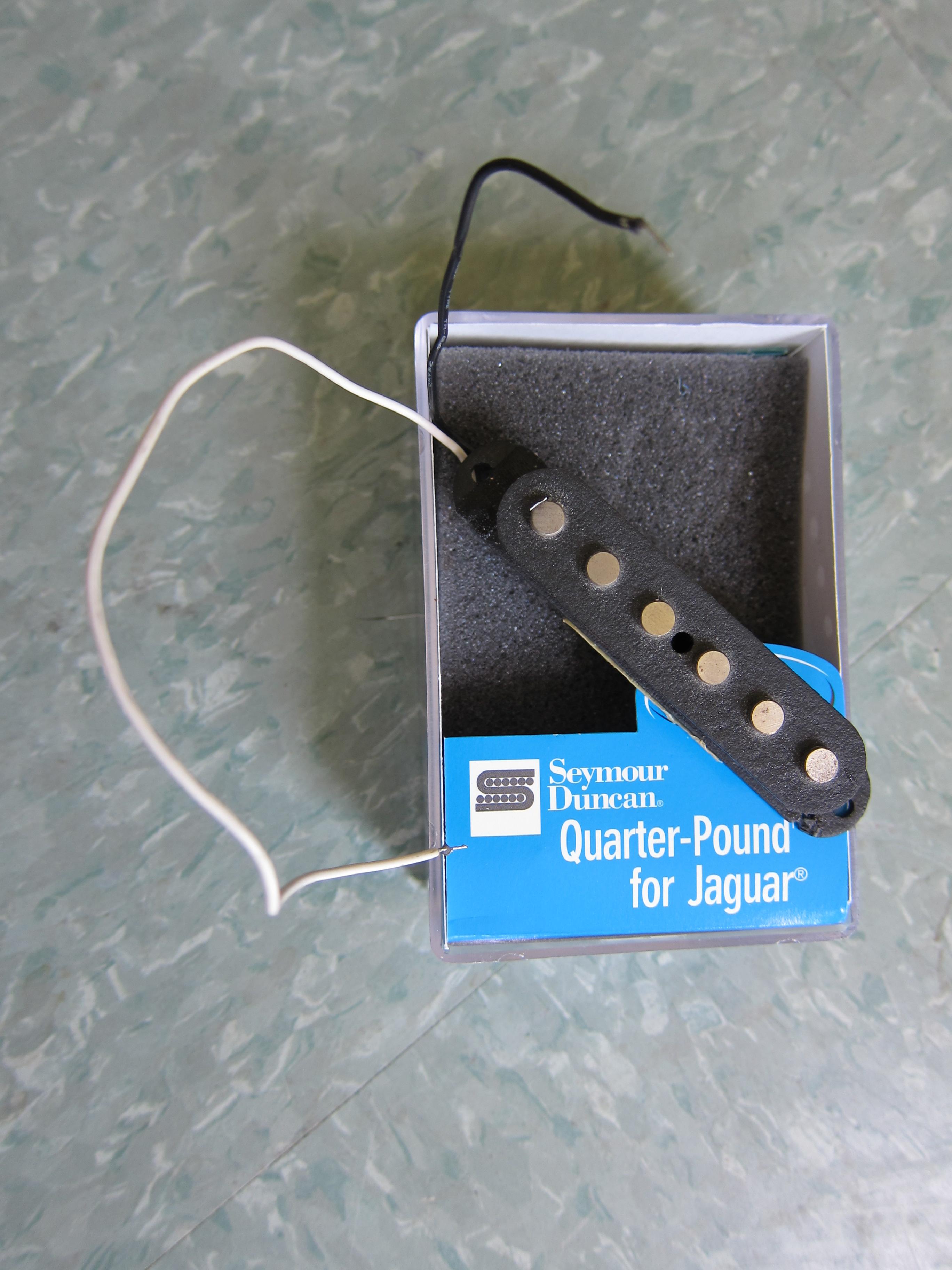
These were the first electric guitar pickups
to be manufactured, starting with the Rickenbacker
"HoreseShoe." They are relatively easy to manufacture: a
magnet of some kind and then one single coil of wiring.
Among all manufacturers, Fender Musical Instruments leads
production and implementation of single coil pickups for their
Stratocaster, Telecaster, Showmaster, Duo Sonic, and Jazzmaster
guitars, just to name a few. The magnetic pole pieces
magnetize the strings, which then cut through magnetic flux
lines that induce electrical signals into the coil. Many
other manufacturers have used single coils, and technically a
P90 is a type of single coil.
The main drawback for "true" single coils in worship music is 60 Hz hum induced by nearby electronics such as building wiring, light dimmers, and transformers (including amplifiers). And it's never fun, in my experience, to arrive at a church with a guitar with true single coils, only to be scratching your head trying to figure out where the hum is coming from, and/or being limited to "notch" positions in your pickup switches. This is why I do not recommend using true single coils for church music because churches have notoriously "noisy" wiring and lighting. Indeed, I know a person who got a nice Fender Mustang bass only to find that the bridge isn't hum canceling, which limited their sonic capabilities in church until they replaced it with a Seymour Duncan Apollo. I recommend hum canceling single coils like Seymour Duncan's Classic Stack Plus: they sound exactly like single coils but without the hum.
Keep in mind, there are variations such as
the Seymour Duncan Apollo and Precision Bass types where the
pickup coils do not "see" all the strings. These are
therefore sort of like a single coil in one way but a humbucker
in another way. Strictly speaking, humbuckers are any
two-coil electric guitar pickup that cancels hum, but the
original design was two coils that stretch across all the
strings, in series, with one in reverse direction so that it
cancels hum, with the magnet usually below the coils. But
this is not always the case.
Humbuckers
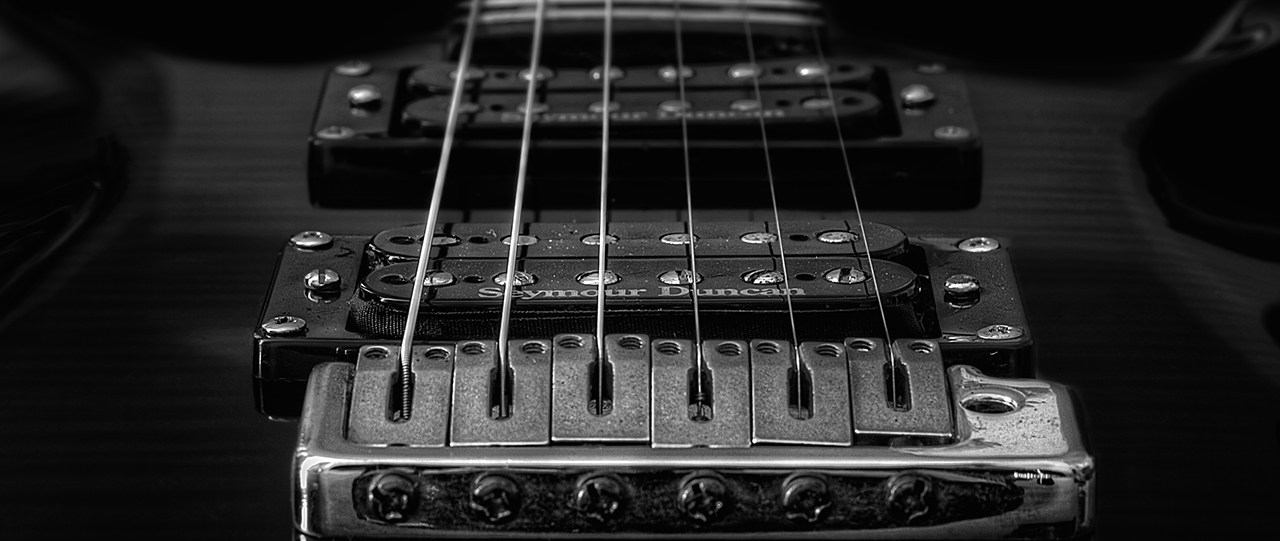
Named due to the main concept of "bucking" or eliminating hum, these usually have a large bar magnet underneath the two coils that are reverse wound (and thus at also reverse magnetic polarity). They have become almost ubiquitous in modern music, and technically some of the other types of pickups I am about to speak about, the Filter'Tron and the Firebird, are also humbuckers, though slightly different. Standard humbuckers tend to be more compressed, less articulate, and less bright than single coils, but this is of course just a generalization. The Seymour Duncan Full Shred Set contains two bright humbuckers that are very articulate. This is why I recommend the Full Shred Set for worship music. I love mine!
Like I said above, strictly speaking, Seth
Lover's original design was two coils, out of phase but wired in
series with a large magnet below the coils. But the word
"humbucker" has become a common word used for any hum canceling
design with more than one coil. But generally, I use this
word, and I encourage you to use this word, to mean the basic
Seth Lover design of two coils out of phase in series with
usually a large bar magnet below them, with one row of screws
and one row of slugs. A Full Shred, with two rows of hex
heads, is still a humbucker. A Filter'Tron, below, while
technically being a humbucker, is still better referred to as a
"Filtertron", etc.
Filter'Tron Type
Gretsch made these in order to "filter" out the hum in single coils. Per Seymour Duncan, the Filter'Tron was the first humbucking pickup, but Gibson beat Gretsch to the patent office. Unlike humbuckers with a large flat magnet under the bobbins, Filter'Trons use a larger magnet. Filter'Trons have top end chime and clarity. Seymour Duncan makes the Psyclone pickup that is meant to fill a humbucker-size pickup slot, and I highly recommend them. Their sound has become very common within worship music, and for mostly good reasons, but you don't have to buy a Gretsch to get the sound. Because pickups are the main source of how your electric guitar sounds, you can just install Psyclones in almost any guitar that came with humbuckers. But keep in mind, the vintage style Psyclones and others will not do well playing metal, not without heavy processing, which can make them sound bad. The solution is to get a custom wound Psyclone bridge from the Seymour Duncan custom shop: they can make one that plays metal. Ask for a duplicate of pickup 366794. That's how I discovered them.
Firebird Type
The original Gibson Firebird guitars had
pickups that, while technically humbuckers, deviated from the
formula. Per StringJoy,
they have two bar style magnets, with each coil wrapped around a
magnet. They are somewhere
between a humbucker and a single coil, yet still sounding
different than both. Per many in online forums and on
social media, Firebird Pickups work great for worship due to
their clarity, brightness, and definition. My next project
is to buy a custom set of Firebird Pickups from Seymour Duncan
that will give me the versatility that I desire.